Explore our complete catalog of industrial mixing tanks, cosmetic foundation blending tools, high-shear emulsion agitators, and specialized beverage blending equipment. Designed to meet cGMP, ISO 22000, and international safety compliance standards.
Custom contract blending lies at the intersection of chemical fluid dynamics, mechanical shear engineering, and surface physics. Whether formulating high-viscosity pharmaceutical creams, dietary powder supplements, emulsified botanical lotions, or functional food beverages, achieving physical homogenisation requires precise dynamic control over fluid velocity gradients, shear stress rates, and temperature vectors.
In industrial processing, non-Newtonian liquids exhibit variable shear-thinning (pseudoplastic) or thixotropic behaviors. Without custom-engineered agitation profiles, localized phase separation, active ingredient settling, or bubble entrapment occurs. As a premier Custom OEM Custom Blending Manufacturer & Exporter, ProTech Health Sciences integrates advanced hydrodynamic modeling and sanitary vessel design to deliver consistent batch-to-batch repeatability for global brand owners.
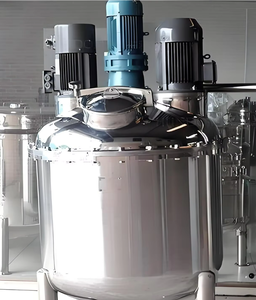
Utilizing high-speed rotor-stator configurations (up to 3,600 RPM) to achieve intense mechanical and hydraulic shear, dissolving insoluble active botanical extracts and stabilizing oil-in-water (O/W) cosmetic matrices.
Dual and triple-layer SS316L vessels equipped with dimpled heating/cooling jackets facilitate precise thermal ramping ($\pm 0.5^\circ C$), preventing heat-sensitive bioactive degradation during lipid phase dissolution.
Operating under continuous negative pressure ($-0.09\,MPa$) to eliminate entrained micro-air bubbles, optimizing bulk density for automated inline filling and preventing lipid oxidation.
In industrial processing for pharmaceuticals, health supplements, and luxury cosmetics, material selection is critical. Stainless steel alloys SS304 and SS316L represent the gold standard for custom blending vessels. SS316L contains 2–3% Molybdenum, providing superior resistance to pitting corrosion induced by chlorides, acidic formulations, and aggressive sanitation agents.
| Blending Vessel Parameters | Pilot-Scale Systems (50L – 300L) | Commercial Production (500L – 3,000L) | Mass Industrial Scale (5,000L – 10,000L) |
|---|---|---|---|
| Metallurgical Grade | SS304 / SS316L Electro-polished | SS316L Contact Parts / SS304 Cladding | SS316L Contact / SS304 Outer Shell |
| Surface Finish (Ra) | Internal Ra $\le 0.4 \mu m$ (Mirror Polish) | Internal Ra $\le 0.2 \mu m$ (Sanitary Grade) | Internal Ra $\le 0.4 \mu m$ (Mechanical Polish) |
| Agitation Options | Anchor Scraper + High-Speed Disperser | Dual Counter-Rotating Scraper + Bottom Homogenizer | Multi-Stage Turbine Agitator + High-Shear Pump |
| Viscosity Capability | 1 – 50,000 cPs | 1 – 150,000 cPs | 1 – 500,000 cPs (Heavy Creams/Gels) |
| Clean-in-Place (CIP) | Manual / Semi-Automated Spray Balls | Fully Automated Rotary CIP / SIP Integration | Dual-Zone Automated CIP Circuit |
| Target Applications | R&D Batches, Serums, Trial Runs | Cosmetic Creams, Gummies, Dietary Liquids | Commercial Juices, Shampoos, Liquid Supplements |
Custom blending extends beyond processing vessels into consumer-facing application tools. The physical interaction between liquid formulas (such as sunless tanning lotions, shimmer body oils, and liquid foundations) and applicator tools determines topical coverage uniformity and streak-free blending.
As an established global OEM exporter, ProTech Health Sciences engineers high-performance cosmetic tools that complement liquid formulations:
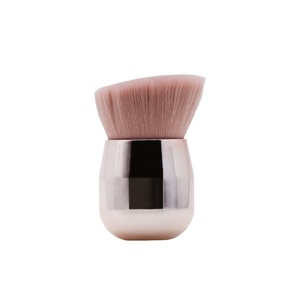
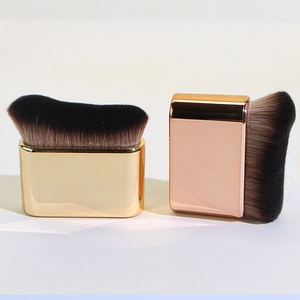
Engineered with velvet-soft, non-porous PBT/Nylon synthetic bristles aligned in curved Kabuki geometries. Density exceeds 50,000 filaments per square centimeter, preventing liquid absorption while ensuring even friction-driven laydown across body contours.
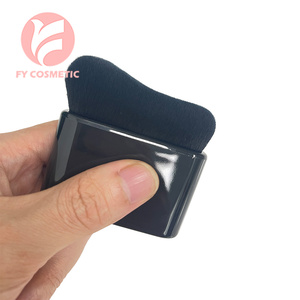
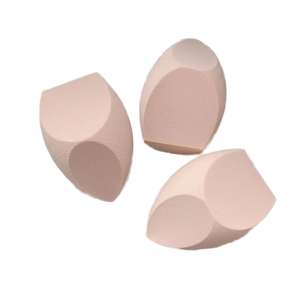
Manufactured using latex-free hydrophilic polyurethane foam technology. The microporous matrix expands when wet, creating a controlled hydraulic cushion that deposits pigment evenly while mitigating skin micro-abrasion.
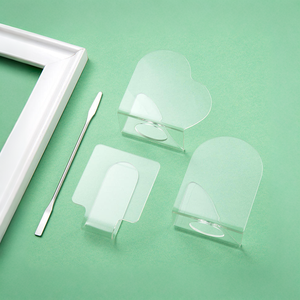
High-clarity PMMA acrylic mixing palettes and SS304 double-ended spatulas designed for salon artists to perform hygienic custom pigment blending, foundation tinting, and topical viscosity adjustments.
The global contract manufacturing and blending equipment landscape is undergoing structural shifts driven by regulatory tightening, sustainability imperatives, and demand for supply chain agility. B2B procurement directors and brand managers must align their manufacturing partnerships with four key emerging trends:
Modern blending tanks are increasingly integrating inline spectroscopic sensors and torque-based viscosity meters. This enables continuous real-time data logging, automatically adjusting motor frequency (Hz) to maintain exact rheological profiles without pulling destructive physical samples.
Escalating global energy costs have accelerated the shift toward cold-process emulsifiers. High-shear mixing systems capable of cold homogenisation reduce production carbon footprints by up to 60% by eliminating traditional thermal cycle delays.
Brands are steering away from rigid, ultra-large MOQs toward flexible skid-mounted blending units. Rapid-changeover sanitary fittings and self-validating CIP skid modules allow manufacturers to process multiple customized SKUs efficiently.
For cosmetic blending accessories, market demand is surging for post-consumer recycled (PCR) aluminum handles, ocean-bound plastic ferrules, and plant-derived bio-polyurethane sponges, backed by full GRS (Global Recycled Standard) certification.
Selecting a qualified OEM contract manufacturer or equipment exporter requires rigorous multi-point evaluation. Brand owners must look beyond initial hardware costs and assess full lifecycle compliance, scalability, and technical support.
Audit the manufacturer's R&D infrastructure. Ensure availability of pilot-scale vessels (50L–100L) for sample batching, accelerated stability testing (40°C / 75% RH), dynamic viscosity profiling, and freeze-thaw challenge testing.
Verify mill test certificates (MTC) for SS304/SS316L vessels. Ensure compliance with 3-A Sanitary Standards, FDA 21 CFR Part 111/211 (for dietary supplements and pharmaceuticals), and ISO 22716 / cGMP guidelines for cosmetics.
Partner with exporters offering comprehensive documentation including Certificates of Free Sale (CFS), Certificates of Analysis (CoA), MSDS sheets, and export packaging compliant with ISPM-15 heat-treated wood palletization.
With over two decades of dedicated manufacturing experience, ProTech Health Sciences stands as a premier contract manufacturer, hardware innovator, and global exporter. Our state-of-the-art facilities combine advanced mechanical engineering with formulation R&D to deliver turnkey OEM solutions for global brands across North America, Europe, Asia-Pacific, and the Middle East.
From raw ingredient procurement and custom formula development to vessel fabrication, cosmetic tool manufacturing, and retail package printing — we manage the complete value chain under one quality management umbrella.
Every production batch undergoes analytical testing in our in-house laboratory, utilizing High-Performance Liquid Chromatography (HPLC), Gas Chromatography (GC-MS), and Atomic Absorption Spectroscopy for heavy metal screening.
We empower both high-growth indie brands and multinational corporations by offering tiered low-MOQ pilot options alongside large-scale 10,000L industrial continuous manufacturing capacity.
Partner with a trusted global OEM custom blending manufacturer and exporter. Contact our engineering and formulation team today for custom quotes, technical blueprints, or pilot samples.
Contact Us