State-of-the-art GMP certified manufacturing laboratory
Automated supplement production line
Premium natural raw ingredients for health supplements
Premium OEM health supplement and skincare products
Knowledge Base & Market Trends

Industry Insights & OEM Resources

Discover technical formulation guides, regulatory advice, and expert analyses on health supplements, skincare, and global market innovation.

0%

Finding a reliable OEM pet supplement manufacturer requires more than comparing prices or admiring attractive packaging. The real assessment begins inside the facility, where raw materials arrive, batches are mixed, and finished products are tested. A dependable partner should explain its quality system clearly. Ask for current GMP documentation, supplier qualification records, certificates of analysis, stability data, and batch traceability. If answers remain vague, pause.

Veterinary nutrition expert Dr. Jean Hofve has said, “Supplements are not a substitute for a healthy diet.” That principle matters when reviewing product formulas and marketing claims. A responsible OEM pet supplement manufacturer should support evidence-based ingredients, suitable dosage guidance, species-specific testing, and cautious communication. Dogs and cats do not process every ingredient in the same way. A formula designed for a 60-pound dog may be unsuitable for a small cat.

Visit the production site when possible. Look at cleaning procedures, allergen controls, storage temperatures, and how samples are retained. Request independent testing for identity, potency, heavy metals, microbes, and contamination. One glossy certificate is not enough. Ask how failed results are investigated.

There is room for honest uncertainty. A manufacturer may have excellent equipment yet lack strong formulation experience. Another may know pet nutrition but struggle with consistent lead times. We should not ignore those weaknesses. Reliability is built through documented processes, transparent communication, and repeatable results.

The strongest partnership feels practical. Samples match specifications. Labels are reviewed carefully. Problems are reported early. That is how a promising product becomes a trustworthy pet supplement.
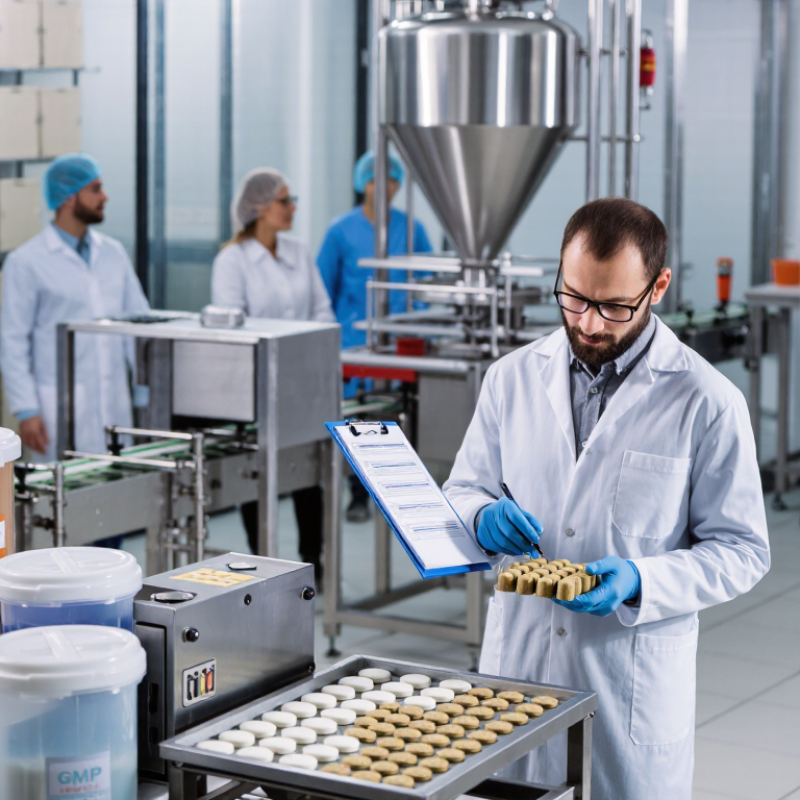
How to Find a Reliable OEM Pet Supplement Manufacturer?

Define Your Pet Supplement Product and OEM Requirements

Before choosing a reliable OEM pet supplement manufacturer, define the product precisely. Identify the target species, life stage, serving size, format, and expected daily use. A soft chew for senior dogs requires different testing from a powdered cat supplement. Describe every active ingredient, its intended amount, and acceptable raw material standards. Avoid vague goals such as “better health.” Use measurable product objectives instead.

Our first draft was too broad. That created delays. A clearer specification should include flavor, texture, color, packaging size, shelf life, storage conditions, and target market. Request ingredient specifications, allergen statements, certificates of analysis, stability data, and batch testing procedures. Confirm whether the manufacturer can support formulation changes, pilot production, and consistent scale-up. These details reveal practical experience, not attractive promises.

Tips: Prepare a one-page OEM brief before contacting factories. Include estimated order volume, launch timeline, packaging preferences, and required documents. Ask how they handle deviations, complaints, recalls, and retained samples. Discuss quality standards early. A supplier should explain its process clearly. If answers remain general, pause and investigate further. Product claims also need careful review for accuracy and local compliance. A polished formula can still fail when its instructions are unclear.

Verify Manufacturer Qualifications, Facilities, and Quality Systems

Choosing an OEM pet supplement manufacturer begins with verified qualifications, not polished sales materials. Request business licenses, production permits, quality certificates, and recent audit records. Confirm each document’s scope, validity, and manufacturing site. A certificate for another facility is not enough. Ask who performs testing and whether laboratories use validated methods. Documents matter. During supplier evaluations, I also check whether technical staff can explain ingredient specifications, batch release, and complaint handling in plain language. Vague answers usually deserve a second review.

Walk through the facility, physically or through a live video audit. Observe material receiving, quarantine areas, weighing rooms, mixing equipment, and finished-goods storage. Floors should be clean, traffic should be controlled, and labels should remain traceable. Inspect calibration tags and maintenance logs. Look for pest-control records, environmental monitoring, and procedures for preventing cross-contamination. A clean lobby proves little. The production details matter more. I once focused too heavily on equipment and missed weak document control. That mistake taught me to compare records with what operators actually do.

A reliable quality system should cover supplier approval, incoming testing, in-process checks, finished-product testing, deviation review, and corrective actions. Request sample batch records and certificates of analysis with sensitive commercial details removed. Check whether results match written specifications and whether out-of-specification events receive documented investigations. Ask how stability, shelf life, storage, and shipment conditions are assessed. Do not rely on promises alone. Schedule a small pilot order, define acceptance criteria, and review performance after delivery. No system is perfect. A manufacturer willing to acknowledge gaps, fix them, and provide evidence is often more trustworthy than one claiming flawless operations.

How to Find a Reliable OEM Pet Supplement Manufacturer?

Verify manufacturer qualifications, facilities, and quality systems before placing an OEM order.

A reliable OEM evaluation should cover regulatory compliance, facility controls, quality documentation, testing capability, traceability, and product stability. Request objective evidence such as current registrations, applicable GMP records, batch testing documentation, supplier approval procedures, complaint records, and recall or traceability procedures.

Assess Ingredient Sourcing, Formulation, and Product Safety

Selecting a reliable OEM pet supplement manufacturer requires more than comparing quotations. APPA’s 2024 report valued U.S. pet industry spending at $152 billion. Grand View Research estimated the global pet dietary supplements market at $1.47 billion in 2023. Growth attracts capable suppliers, but also careless ones.

Assess ingredient sourcing at the batch level. Ask for supplier names, country of origin, specifications, allergen controls, and recent certificates of analysis. Testing should cover identity, potency, microbes, heavy metals, and unwanted contaminants. Traceability must reach the receiving dock, not stop at a spreadsheet. I would request a retained sample from every production lot. Small detail, big protection.

Formulation expertise matters equally. A manufacturer should explain dosage calculations, ingredient interactions, palatability trials, stability testing, and storage conditions. AAFCO publications can help reviewers check nutritional terminology and ingredient definitions. FDA guidance also reminds manufacturers that animal food claims must be truthful and properly supported. A glossy GMP certificate is not proof of daily discipline. Audit the facility, review deviations, and inspect cleaning records. No audit is perfect. That is the uncomfortable part. I would also challenge an unusually long shelf-life claim unless real-time or validated accelerated stability data supports it. Product safety depends on evidence, not confident language.

Review Testing, Packaging, Labeling, and Regulatory Compliance

How to Find a Reliable OEM Pet Supplement Manufacturer?

The global pet dietary supplements market was valued at approximately USD 2.3 billion in 2023, according to Grand View Research. This growth attracts capable suppliers and careless operators. A reliable OEM should provide batch-specific certificates of analysis, not generic laboratory files. Test the finished batch. Not just raw materials. Confirm identity, potency, microbiological safety, heavy metals, and product stability through an independent ISO/IEC 17025 laboratory. Testing methods should match the formula and target animal.

Packaging needs equal attention. Ask for moisture, oxygen, light, and seal-integrity data. A soft chew can change texture inside weak packaging. A liquid may need a stronger closure and transport testing. Check lot codes, expiry dates, tamper evidence, and traceability from raw material to shipment. APPA’s 2024–2025 National Pet Owners Survey estimated 82 million U.S. households owned a pet, increasing the need for consistent, scalable quality.

Labels should state species, serving size, ingredients, net quantity, manufacturer details, storage instructions, and appropriate warnings. Claims require special caution. In the United States, animal products may fall under different regulatory categories, while other markets apply separate feed and labeling rules. Review applicable FDA requirements, AAFCO model guidance, and destination-country regulations with a qualified specialist. A polished compliance folder can still hide weak factory habits. Request mock labels, stability records, complaint procedures, and recall documentation before signing. Manufacturers should explain failed tests openly, because silence is not quality control.

Compare Costs, Communication, Minimum Orders, and Production Support

How to Find a Reliable OEM Pet Supplement Manufacturer?

Cost should be measured beyond the quoted unit price. Request a complete estimate covering formulation, testing, packaging, freight, and revisions. The American Pet Products Association reported U.S. pet industry spending of $147 billion in 2023. This growth increases supplier demand, but low bids may hide weak quality controls. Compare three written quotations. Ask which services are included.

Communication often predicts production reliability. During evaluation, test response speed with practical questions about ingredient substitutions, stability testing, and delayed materials. A capable manufacturer should provide named contacts, clear timelines, and documented change approval. Vague replies are costly. I would also request sample records, such as batch specifications and test reports, with confidential information removed. This reveals working habits better than polished sales materials.

Minimum order quantities deserve careful negotiation. A large MOQ can reduce the price per unit, yet it may trap cash in slow-moving stock. Ask whether a pilot batch is available and whether packaging components require separate minimums. Grand View Research estimated the global pet supplements market at about USD 2.9 billion in 2023, with continued growth expected through 2030. That opportunity does not justify overproduction. Production support should include formulation guidance, sourcing alternatives, quality testing, batch documentation, and corrective-action procedures. Verify who handles each task. One overlooked detail is storage: heat-sensitive ingredients may need controlled conditions during production and transport. I have found that a cheaper quote becomes expensive when support ends after payment.

How to Find a Reliable OEM Pet Supplement Manufacturer? — Compare Costs, Communication, Minimum Orders, and Production Support
Evaluation Dimension Supplier Profile A
Small-Batch Specialist
Supplier Profile B
Mid-Size OEM Factory
Supplier Profile C
Large-Scale Contract Manufacturer
Supplier Profile D
Formulation-Focused Partner
Indicative Product Cost USD 2.20–4.80 per unit for a standard 60-count chew or powder pouch USD 1.60–3.80 per unit at a typical commercial volume USD 1.20–3.20 per unit at high production volume USD 2.80–6.50 per unit because formulation and testing are more specialized
Typical Minimum Order Quantity 500–1,000 units per SKU 1,000–3,000 units per SKU 5,000–20,000 units per SKU 2,000–5,000 units per SKU
Sample and Development Fees USD 100–500 for samples, flavor trials, or label adjustments USD 200–800, often credited against the first production order USD 500–2,000, especially for technical or stability work USD 1,000–5,000 for custom formulation, testing, and documentation
Standard Production Lead Time 4–8 weeks after artwork approval and deposit 6–10 weeks after formula and packaging approval 8–14 weeks, depending on production scheduling and volume 10–18 weeks for new formulations; 6–10 weeks for existing formulas
Communication Responsiveness Usually responds within 1 business day; direct access to an owner or project lead Usually responds within 1–2 business days through a dedicated account manager Usually responds within 2–4 business days; several departments may be involved Usually responds within 1–2 business days with technical and commercial contacts
Customization Capability Best for stock formulas, basic flavor changes, packaging, and label customization Supports formula adjustments, dosage changes, private labeling, and multiple package formats Strong capacity for complex formulas, multiple SKUs, and large packaging programs Strongest option for novel ingredients, targeted benefits, and evidence-based formulas
Quality and Compliance Documentation Batch records, certificates of analysis, allergen statements, and basic traceability are commonly available Typically provides certificates of analysis, raw-material specifications, batch records, and manufacturing certificates Usually offers comprehensive quality systems, supplier audits, lot traceability, and formal change-control procedures Usually provides detailed formulation records, ingredient justification, testing plans, and stability documentation
Testing Support Routine identity, microbiological, and contaminant testing may be available through internal or external laboratories Commonly supports microbiological, heavy-metal, potency, and finished-product testing Broad laboratory access, validation programs, stability studies, and production-scale testing Strong support for potency verification, stability testing, palatability trials, and formula optimization
Packaging and Artwork Support Basic label templates and packaging sourcing; fewer premium packaging options Artwork review, barcode guidance, pouch, bottle, sachet, and jar sourcing are commonly available Wide packaging selection, automated filling options, and support for high-volume packaging procurement Packaging support is available, but technical development usually receives greater priority
Production Support Flexible coordination and low-volume production, but limited backup capacity during peak seasons Balanced support across planning, procurement, quality control, filling, labeling, and shipping Strong production planning, capacity reservation, inventory programs, and repeat-order management Strong technical support; production scheduling may take longer for complex formulas
Best Fit for Startups testing demand, limited regional launches, and buyers with several small SKUs Growing brands seeking a balance between customization, cost, MOQ, and operational support Established brands requiring high volume, lower unit costs, and long-term supply continuity Brands developing differentiated products with specialized ingredients or functional claims
Key Risk to Verify Confirm backup suppliers, testing scope, production capacity, and consistency between batches Verify actual factory ownership, subcontracting rules, change-control procedures, and capacity commitments Confirm whether smaller accounts receive adequate attention and whether high MOQs fit forecast demand Verify claim substantiation, regulatory review, formula ownership, stability evidence, and total development cost
Indicative industry benchmarks only. Actual pricing, MOQs, lead times, testing requirements, and documentation depend on product format, ingredient specifications, packaging, destination-market regulations, order volume, and the manufacturer’s quality system.

FAQS

What details should be included in an OEM pet supplement brief?

Identify the animal species, life stage, serving size, format, and daily use. Include flavor, texture, color, package size, shelf life, and storage conditions. Vague goals create delays. Use measurable objectives.

How can I describe the formula clearly?

List every active ingredient and its intended amount. Define acceptable raw material standards and allergen requirements. State whether the product is a chew, powder, or liquid. Our first draft was too broad. That mistake cost time.

Which documents should a manufacturer provide?

Request ingredient specifications, batch-specific certificates of analysis, allergen statements, and stability data. Ask for batch testing procedures and retained-sample records. Generic laboratory files are not enough. Details matter.

What testing should the finished product receive?

Test the finished batch, not only its raw materials. Check identity, potency, microbiological safety, heavy metals, and stability. Use an independent ISO/IEC 17025 laboratory when appropriate. Testing methods should match the animal and formula.

How should packaging be evaluated?

Ask for moisture, oxygen, light, and seal-integrity data. Weak packaging can change a soft chew’s texture. Liquid products may need stronger closures and transport testing. Check lot codes, expiry dates, tamper evidence, and traceability.

What information should appear on the label?

Include species, serving size, ingredients, net quantity, manufacturer details, storage instructions, and suitable warnings. Review every claim for accuracy and local compliance. Clear instructions matter. A polished label can still fail.

Can the manufacturer support changes and larger production?

Confirm support for formulation changes, pilot production, and consistent scale-up. Ask about estimated order volume and launch timing. Request evidence from previous production processes when available. Promises alone are weak evidence.

How should quality problems and complaints be handled?

Ask how the factory manages deviations, complaints, recalls, failed tests, and retained samples. Request written procedures and recall documentation before signing. Manufacturers should explain failures openly. Silence is not quality control.

Conclusion

Finding a reliable OEM pet supplement manufacturer starts with clearly defining your product concept, target pets, dosage form, ingredients, packaging needs, and expected order volume. This preparation helps potential partners understand your requirements and provide accurate recommendations. Before making a decision, review each manufacturer’s qualifications, production facilities, quality management systems, and experience with similar pet products. Reliable documentation, hygienic operations, and consistent manufacturing procedures are essential for product quality and safety.

You should also evaluate ingredient sourcing, formulation expertise, safety controls, laboratory testing, packaging options, labeling accuracy, and regulatory compliance for your target market. Request clear information about quality inspections, stability testing, production timelines, minimum order quantities, pricing, and after-sales support. Effective communication is equally important, especially when adjusting formulas, approving samples, or resolving production issues. By comparing technical capabilities, transparency, costs, and service support, you can select an OEM pet supplement manufacturer that is capable of delivering safe, consistent, and market-ready products.

Elowen

Elowen

Elowen is a highly skilled marketing professional dedicated to helping businesses understand the value, performance, and practical applications of our products. With a strong background in market research, content strategy, customer insights, and product communication, Elowen transforms complex......