Discover technical formulation guides, regulatory advice, and expert analyses on health supplements, skincare, and global market innovation.
China’s search for the best OEM functional health food manufacturer requires more than attractive packaging. It demands evidence, careful formulation, and dependable production controls. A trustworthy partner should explain ingredient origins, testing methods, allergen management, and shelf-life data clearly.
Dr. Stephen DeFelice, who introduced the term “nutraceutical,” described it this way: “A nutraceutical is a food or part of a food that provides medical or health benefits.” His definition highlights an important boundary. Functional products should support wellness without making unsupported disease-treatment promises.
A capable OEM manufacturer can turn this principle into a practical product. Picture a capsule line with documented batch numbers, sealed ingredient drums, and laboratory reports available before shipment. The details matter. They reveal whether a factory understands quality beyond marketing language.
China offers extensive manufacturing capacity, but capacity alone does not prove reliability. Buyers should review certifications, supplier audits, stability testing, and complaint-handling procedures. They should also confirm whether claims fit the target market’s rules.
The best partner may not be the cheapest one. That sounds obvious, yet many brands still compare prices first. This can create problems later, including inconsistent texture, weak documentation, or delayed corrections.
An experienced manufacturer should welcome difficult questions. Can it provide traceable raw materials? Can it adjust a formula without damaging its sensory profile? Can it explain why each ingredient is included?
These questions help separate a real OEM functional health food expert from a simple reseller. Still, no manufacturer is perfect. Honest communication, independent verification, and continuous improvement remain essential. The right partnership is built through evidence, not confident slogans.
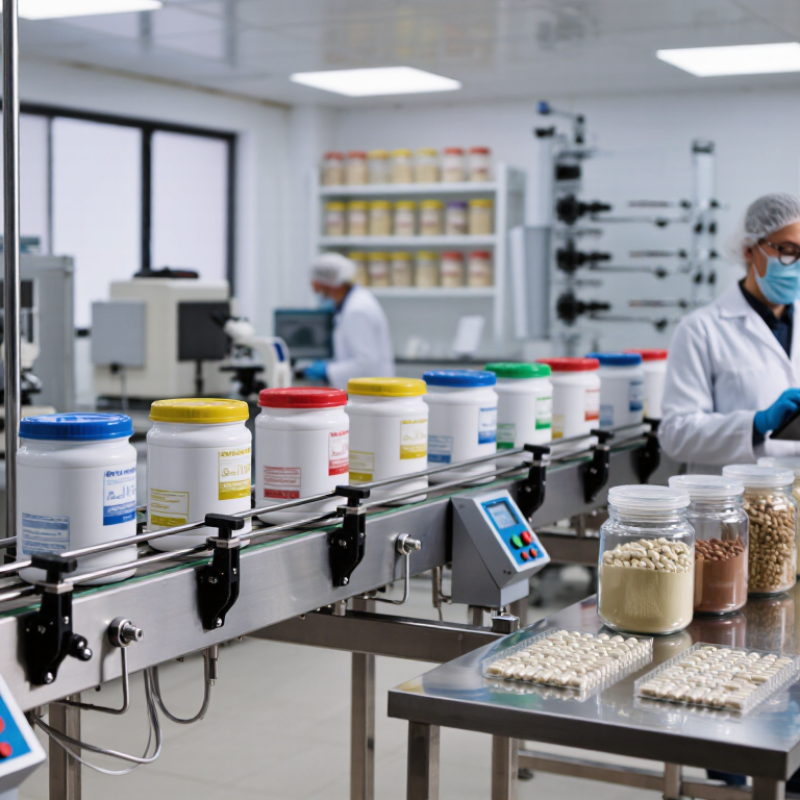
An OEM functional health food manufacturer in China develops and produces supplements for another company’s brand. OEM means the buyer provides specifications, while the manufacturer manages formulation, raw materials, production, packaging, and quality testing. Some factories also offer ODM services, creating formulas from an initial concept. The difference matters when evaluating technical responsibility.
The market is substantial. Grand View Research valued the global dietary supplements market at approximately USD 177.5 billion in 2023, with projected growth through 2030. Innova Market Insights also reported continued consumer interest in functional products supporting immunity, digestion, energy, and healthy aging. These trends encourage Chinese manufacturers to build flexible production lines for powders, capsules, tablets, gummies, and liquid products.
Details matter. A serious supplier should provide batch records, certificates of analysis, stability data, allergen controls, and traceable ingredient documentation.
In practice, choosing an OEM partner requires more than reviewing a factory tour. The buyer should inspect testing procedures, verify production licenses, assess formula evidence, and confirm labeling requirements for each target market. China’s health food filing and registration systems create different compliance paths, depending on the product and claims. International requirements may add controls for contaminants, dosage accuracy, and prohibited ingredients. An experienced manufacturer explains these limits clearly rather than promising every marketing idea.
That is reassuring. However, audits can still miss weak supplier management or inconsistent raw materials. Regular third-party testing, retained samples, and written change-control procedures reduce that risk.
No factory is perfect. Good partners admit where their system needs improvement.
China Best OEM Functional Health Food Manufacturer?
Key Criteria for Identifying the Best OEM Manufacturer
Choosing an OEM functional health food manufacturer requires more than comparing prices. A reliable partner should show practical experience with similar products, dosage forms, and target markets. Ask for production records, raw material specifications, and examples of stability testing. A polished presentation can still hide weak documentation.
Quality systems deserve close attention. Check whether the facility follows GMP principles and maintains suitable HACCP or ISO 22000 procedures. Review supplier approval, allergen control, cleaning validation, and batch traceability. Request recent certificates of analysis for key ingredients, not only finished products. Independent laboratory testing can verify identity, purity, heavy metals, microbes, and contaminants.
Communication is equally important. The manufacturer should explain lead times, minimum order quantities, packaging limits, and formulation ownership in clear language. Regulatory support must match the destination market, because labeling and permitted claims differ across countries. Small details matter. Can the team provide a sample COA within a day? Can it explain why a formula changed? These answers reveal operational maturity. I would also inspect the site, when possible, and speak with quality staff directly. No factory is perfect, and delays may happen. The real test is whether problems are documented, investigated, and corrected instead of quietly ignored.
This evaluation framework assigns a 100-point priority score to the main criteria used when assessing a functional health food OEM manufacturer. Regulatory compliance, quality systems, laboratory testing, formulation capability, production capacity, supply-chain transparency, customization, and communication should all be reviewed before selecting a manufacturing partner.
Choosing the best China OEM functional health food manufacturer starts with understanding its manufacturing process. A reliable factory begins with a detailed product brief, including target users, serving size, ingredient preferences, flavor, and packaging format. Its technical team then checks whether the concept is stable, safe, and suitable for production. Some ideas look attractive on paper but perform poorly in testing.
The process usually moves from laboratory formulation to a small pilot batch. Specialists measure ingredient identity, purity, moisture, microbial limits, and heavy metals through qualified testing procedures. They adjust taste, texture, dosage, and mixing time when necessary. After approval, production follows documented procedures under recognized food safety systems, such as GMP and HACCP principles. Clean rooms, calibrated equipment, and batch records help reduce avoidable variation. Small details matter.
Before release, finished products should undergo quality checks for appearance, weight, packaging integrity, and required laboratory specifications. Stability testing can help estimate shelf life under controlled conditions. Clear labels and compliant claims also need careful review for the destination market. A trustworthy manufacturer should provide traceability from incoming materials to final cartons. It should also explain delays or failed batches honestly. No factory is perfect. An experienced partner shows how it identifies mistakes, corrects them, and prevents repetition. Oversight remains necessary, even when the documents appear complete.
| Stage | Manufacturing Step | Main Inputs | Typical Reference Data | Quality and Compliance Controls | Typical Output |
|---|---|---|---|---|---|
| 1 | Product Brief and Regulatory Review | Target consumer, dosage form, serving size, claims, target market, packaging requirements | 1–3 concept formulas 1 serving specification Claim review before sampling | Ingredient legality, maximum-use limits, prohibited substances, allergen requirements, and permitted claims are reviewed for the destination market. | Approved product brief, preliminary formula, target cost, and compliance checklist |
| 2 | Raw Material Qualification | Vitamins, minerals, botanical extracts, probiotics, amino acids, carriers, excipients | Identity verification Batch traceability Shelf-life review | Supplier approval, certificate-of-analysis review, identity testing, microbiological limits, heavy metals, pesticides, residual solvents, and authenticity checks where applicable. | Qualified supplier list, approved specifications, and incoming inspection plan |
| 3 | Laboratory Formulation and Pilot Sample | Selected active ingredients, fillers, binders, flavors, sweeteners, capsule or tablet materials | Typical pilot batch: 1–10 kg Dosage uniformity assessment Sensory screening | Compatibility, flowability, dispersibility, taste, color, odor, active-content calculation, and preliminary physical stability are evaluated. | Laboratory sample, formula version, manufacturing instructions, and test summary |
| 4 | Pilot Production and Process Validation | Approved formula, production equipment, packaging materials, process instructions | Typical pilot scale: 10–100 kg 3 validation lots commonly used Critical process parameters recorded | Mixing uniformity, fill-weight variation, tablet hardness, friability, capsule weight, yield, line clearance, and process reproducibility are checked. | Validated process parameters, batch record template, and confirmed production yield |
| 5 | Blending and Homogenization | Weighed active ingredients and excipients | Controlled mixing time Low-humidity handling for hygroscopic powders Sampling from multiple locations | Material reconciliation, sieve control, blend uniformity, foreign-matter prevention, and documented equipment cleaning are applied. | Homogeneous bulk blend ready for encapsulation, compression, filling, or granulation |
| 6 | Dosage-Form Manufacturing | Bulk blend, capsules, tablet tooling, sachet film, liquid base, or gummy mass | Tablet friability typically ≤1% as a reference Weight variation monitored in-process Liquid pH and viscosity controlled | In-process checks cover appearance, net content, weight, hardness, disintegration or dissolution where relevant, fill volume, and seal integrity. | Finished capsules, tablets, powders, liquids, gummies, or functional food portions |
| 7 | Microbiological and Chemical Testing | Finished-product samples and retained samples | Total aerobic microbial count Yeasts and molds Pathogen testing where required Active-marker assay | Testing is performed against approved specifications. Depending on the formula, controls may include heavy metals, pesticide residues, aflatoxins, residual solvents, allergens, and adulterants. | Certificate of analysis, laboratory results, deviation review, and batch disposition decision |
| 8 | Packaging and Label Control | Bottles, pouches, blister packs, sachets, desiccants, cartons, labels, and inserts | Lot number and expiry date Tamper-evident control where applicable Barcode verification | Packaging-component inspection, label reconciliation, allergen declaration, nutrition information, serving instructions, storage conditions, and market-specific labeling are verified. | Sealed retail units with traceable lot coding and approved artwork |
| 9 | Stability and Shelf-Life Evaluation | Packaged finished product, proposed storage conditions, stability protocol | Real-time study: commonly 25°C/60% RH Accelerated study: commonly 40°C/75% RH Time points defined by protocol | Active potency, moisture, water activity, microbial quality, appearance, odor, texture, package integrity, and preservative performance are monitored when relevant. | Recommended shelf life, storage statement, and stability report |
| 10 | Final Release, Warehousing, and Shipment | Released finished goods, shipping cartons, pallet labels, logistics documents | FIFO/FEFO inventory control Temperature and humidity monitoring Retained samples stored by lot | Quality-release authorization, finished-goods inspection, carton count, pallet verification, traceability records, and transport-condition review are completed. | Shipment-ready products, release documentation, and complete batch traceability package |
Choosing a China OEM functional health food manufacturer requires more than a factory tour. Quality control should cover raw material approval, allergen separation, metal detection, batch records, and full traceability. WHO estimates that 600 million people suffer foodborne illness annually, with 420,000 deaths. That figure shows why preventive controls matter.
A reliable manufacturer should provide HACCP or ISO 22000 systems, GMP-based production, supplier audits, and independent laboratory results. Verify each certificate directly. Check its scope, expiration date, production site, and issuing body. China’s SAMR rules require registration or filing for applicable health foods, depending on ingredients and claims. Labels, formulas, evidence, and advertising language must match local requirements. A certificate is useful evidence, but it is not proof of perfect control. This distinction is often missed.
Tips: Request three recent batch records, not sample documents. Compare finished-product results with specifications. Ask for heavy-metal, microbial, pesticide, and stability testing where relevant. Review complaint logs and recall procedures. The USDA Economic Research Service estimated that foodborne illness costs the United States about 15.6 billion dollars annually, showing the financial impact of weak controls. Keep communication written and traceable. One practical weakness remains: even strong audits may overlook seasonal supplier changes. Recheck critical materials before every major production run.
The global functional foods market was valued at about USD 267.9 billion in 2023, according to Grand View Research. Its 2024–2030 forecast shows continued growth, increasing pressure on manufacturers to deliver consistent quality. A suitable partner should provide a verifiable food safety system, not attractive promises. Review HACCP plans, ISO 22000 certification, allergen controls, sanitation records, and batch traceability. Ask to inspect production areas, raw material storage, and temperature logs. Details matter.
A reliable OEM partner should support formulation, stability testing, packaging compatibility, and compliant product claims. Request recent certificates of analysis from qualified laboratories, not only internal reports. Check how the factory manages deviations, recalls, supplier qualification, and corrective actions. The World Health Organization identifies strong quality systems and traceability as essential parts of safe food production. Begin with a pilot batch. Measure taste, dissolution, fill weight, microbial results, and delivery accuracy. A polished factory tour proves little. Pricing also needs careful review. Low quotes may hide higher testing costs, large minimum orders, or weak documentation. No partner is perfect. I would still ask difficult questions, record every answer, and compare evidence across at least three facilities. According to Fortune Business Insights, demand for functional food products is expanding as consumers focus more on preventive health and nutrition. That growth makes rushed supplier selection especially risky. Expect clear timelines, signed specifications, transparent change control, and prompt communication when something goes wrong.
Provide target users, serving size, ingredients, flavor, and packaging format. Clear details reduce later changes. Vague briefs create avoidable confusion.
Technical specialists review stability, safety, dosage, taste, and production suitability. Laboratory work usually comes before a small pilot batch. Some attractive ideas fail testing.
Testing may cover identity, purity, moisture, microbes, pesticides, and heavy metals. Results should come from qualified laboratories. Check critical materials again.
A pilot batch reveals mixing, texture, dosage, and timing problems before full production. It uses real equipment and measured ingredients. Small trials matter.
GMP-based procedures, HACCP principles, clean rooms, calibrated equipment, and batch records support consistency. These controls do not guarantee perfection. Oversight remains necessary.
Check appearance, weight, package seals, laboratory results, and label accuracy. Stability testing helps estimate shelf life. A sealed carton can still hide a quality issue.
Confirm the certificate’s scope, expiry date, production site, and issuing organization. Review the actual documents directly. A certificate is evidence, not proof of perfect control.
Request three recent batch records, laboratory results, complaint logs, and recall procedures. Compare results with product specifications. Sample documents may look better than reality.
Seasonal supplier changes may alter ingredient quality or testing results. Recheck critical materials before major production runs. Audits can miss this gap.
The manufacturer should explain the failure, correct the cause, and prevent repetition. Written records should show each action. Honest reporting matters more than polished paperwork.
Choosing the best OEM functional health food manufacturer in China requires more than comparing prices. An OEM partner should provide product development, ingredient sourcing, formulation support, production, packaging, and documentation tailored to a buyer’s requirements. The evaluation should focus on manufacturing capacity, technical expertise, transparent communication, flexible minimum order quantities, and the ability to maintain consistent quality from pilot batches to large-scale production.
A reliable manufacturing process typically includes concept review, formula development, sample testing, raw material inspection, controlled production, finished-product testing, packaging, and shipment preparation. Quality systems, appropriate certifications, traceability, hygiene controls, and compliance with the target market’s regulations are essential. Before selecting a partner, buyers should review facility qualifications, audit procedures, testing reports, production lead times, quality agreements, and after-sales support. Careful due diligence helps ensure that the chosen manufacturer can deliver safe, consistent, compliant, and commercially suitable products over the long term.